Conflict Without Villians
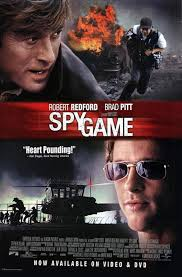
April 1, 2026It’s been a long time since I’ve written for the podcast but I was inspired recently after purchasing a new VCR allowing me to play my treasured VHS tapes for the first time in years. The very first film I re-watched was “Spy Game” starring Brad Pitt and Robert Redford. This has been a favourite of mine since I was a teenager and involves an old spy (Redford) on his last day of work having to put together a clandestine operation to rescue his apprentice (Pitt) after a botched personal operation of his own.
Soon after, I watched “Top Gun” and then the movie “Driven” – an underrated 2001 movie about Indycar racing. Both of those are favourite films of mine and one curious thing stuck out to me: they all three have no villains, neither a single person nor a group. That made me think, while villains are certainly common we may think they are almost ubiquitous or mandatory for most genres of films but they’re really not. Instead, just having an internal conflict may suffice to be the “bad guy” of the film. Let’s break down these three movies as examples.
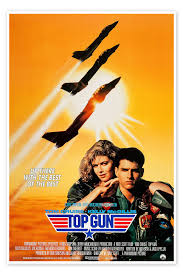
Firstly, Top Gun, my single favourite movie of all time and has always been since…Well, literally around the time I learned to walk. While there IS an air battle against nameless enemy pilots at the very end of the movie, there is no mention of any conflict throughout the film. Some fans of that film may contest me as at the very beginning of that movie, two of the main characters encounter a new MIG fighter jet but it’s not in a battle and they just take a picture of it with a camera. While “Maverick” (Tom Cruise’s lead character) does have a rival at the Top Gun school who goes by “Iceman” (played by Val Kilmer), he is not a villain. In fact, he’s very much the good guy with Maverick being immature and hot-headed. At the end of the film the two become wingmen in the final battle and indeed are best friends by the second movie, “Top Gun: Maverick”. I would argue that the conflict in this film is really Maverick resolving his own interpersonal issues of loss – both his father, and later, his backseat Radio Intercept Officer (RIO).
“Spy Game” is built around training vignettes covering Brad Pitt and Robert Redford’s relationship from apprentice spy to working together on dangerous missions decades later. The “conflict” really just revolves around Robert Redford trying to get through his last day on the job while putting together his own private mission using his spy resources to get Pitt out of prison in China after Pitt’s own botched private mission. While the vignettes do have a couple action scenes, there is no central villain or organization at all.
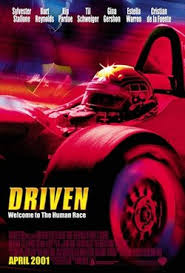
Finally, we come to “Driven” which revolves around a young and promising driver “Jimmy Bly”, played by Kip Pardue (of Resident Evil 7 voice-acting fame) who needs a mentor in Sylvester Stallone’s “Joe ‘The Hummer’ Tanto” character, who comes back from a forced retirement to mentor the kid and help him work through his distractions. That said, none of the characters around those two are villains. While there is a rival German driver, he’s absolutely a good person and in many ways mirrors Jimmy Bly as he makes some poor personal decisions around trying to get rid of what he sees as his own distractions. There is a minor character played by Gina Gershon who is bitter over her divorce from Joe Tanto but this is quickly resolved and not a major part of the plot. At the end, the three drivers finish 1st , 2nd , 3rd in the final race and everything seems to be resolved in a satisfying and believable way.
My point is these movies offer compelling storylines without any central villain or organization and are amongst my favourite films. Not every story structure demands a single “bad guy” to be beaten and internal conflicts and rivalries between good people are just as compelling!
-Moby